


When Ice Cream had a Meltdown by Michelle Robinson & Tom Knight (Scholastic)
When Ice Cream had a Meltdown is a super sweet story about friendship and loving yourself for who you are. Plain Ice Cream is worried because none of the children choose her from the freezer. Her friends try to be encouraging and kind but time and time again, Plain Ice Cream is left behind.
Young readers will love the fun characters and chatting about which ice cream they would choose. Plain Ice Cream’s reactions are sure to strike a chord emotionally and help children to understand how it feels to be left out as well as how to support a friend who is “having a meltdown”.
Tom Knight’s illustrations are full of life and colour. The size of the characters on the page make this book perfect for reading aloud and discussing in the classroom. This is sure to be a hit with EYFS and KS1 classes!

The Unicorn who came to Breakfast by Emma Adams & Mike Byrne (Scholastic)
Unicorns are always popular: they’re colourful, they’re fun, and they’re sure to brighten up any day.
When a unicorn knocks on the door, what promised to be a boring day is suddenly full of excitement! The unicorn shows its new friends how to make the most out of life – eat all the food, play all the games, read all the books – nevermind the mess along the way! Young readers will laugh at the unicorn’s antics and be inspired to find all sorts of things to do instead of saying, “I’m bored.”
Mike Byrne has created a very cool unicorn. It has confidence, charm and a complete disregard for the mess it leaves in its wake. This is exactly who children want to knock on their door on a rainy day!
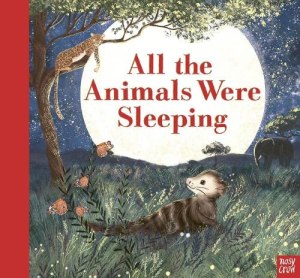
All the Animals were Sleeping by Clare Helen Welsh & Jenny Lovlie (Nosy Crow)
I love it when picture books combine with non-fiction to create a beautiful story that charms as well as educates. In All the Animals were Sleeping, a little mongoose is finding its way to bed past all sorts of animals on the Serengeti. With the lyrical refrain of “All the animals were sleeping”, this sweet little creature shows readers how giraffes, zebras, elephants and other animals go to sleep at night.
Jenny Lovelie’s illustrations are soft and gentle – just right for bedtime. Readers will love watching the sun gradually set until they find themselves in the dark with the cheetah and a little mongoose who wants to make it home to its family.
A non-fiction section at the end of the book gives readers more information about each of the animals included in the story. There is also a QR code inside the front cover that takes readers to a free Stories Aloud audio book.
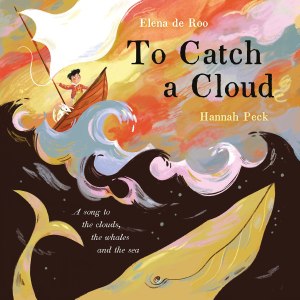
To Catch a Cloud by Elena de Roo & Hannah Peck (Faber Childrens)
Where do clouds go when they rush past in a windy sky? A young boy finds out as he races across land and sea, watching a cloud change from a little wisp to an angry storm. The power of the wind, waves and the depth of the sea push and pull in a beautiful song that will have children swaying along.
This is a unique picture book that tells a story through a sea shanty. I’ve made up my own tune to sing this story and it transforms the words into an epic adventure. Teachers and children will have a fantastic time finding the rhythm of the words and singing the tale together.
Hannah Peck’s gorgeous illustrations sweep across the page with the story. Everything has movement, adding so much to the atmosphere of the boy’s adventure.
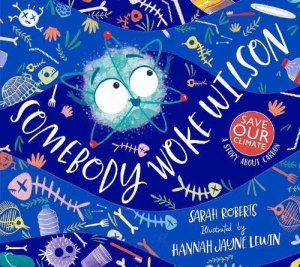
Somebody Woke Wilson by Sarah Roberts & Hannah Jayne Lewin (Scholastic)
Picture books with an environmental message are so powerful. They help children to understand the issues and inspire them to make a difference. Somebody Woke Wilson is the fascinating story of a tiny carbon atom who travels from deep underground through oil, into the atmosphere, inside a cow and, finally, back into the earth where he belongs. This unusual adventure will help children to think about what carbon is and prompt discussion about why Wilson didn’t want to be woken up in the first place. A very helpful introduction gives teachers and parents information about the carbon cycle and why we need carbon to stay in the ground rather than filling up the atmosphere.
This is a picture book for all ages. Younger children will enjoy the cute character and all of his misadventures while children in Key Stage Two will be able to use this story to help them sketch out and describe the carbon cycle and its impact.
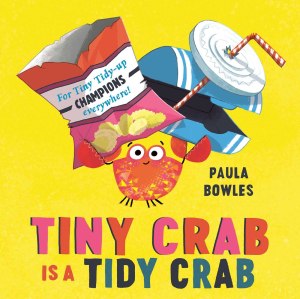
Tiny Crab is a Tody Crab by Paula Bowles (Simon & Schuster)
Life at the beach is so much fun, especially with friends. But when those friends won’t tidy up their mess, suddenly it becomes a problem. Tiny Crab spends all night cleaning up. The next morning, everyone is back, making even more mess than the day before. What is Tiny Crab going to do?
Young readers will empathise with Tiny Crab. They’ll see how hard he works to keep the beach clean and understand his frustration when it keeps getting worse. When, eventually, Tiny Crab tells the other animals how he feels, they realise and apologise. It doesn’t take long to tidy up when everyone helps and it’s even better when they don’t make a mess in the first place. The beauty of nature and the importance of looking after it become abundently clear.
I’m looking forward to using this book with my Brownie unit (Girlguiding). We often talk about the Countryside Code and they learn to “take only photos and leave only footprints.” This story will help them to see the impact of littering and how important it is to work together to keep our world tidy.

Cats in Chaos by Peter Bently & John Bond (Harper Collins)
We can’t resist a book about cats in our house. We hear our own cats prowling around in the night and try to work out what they’re up to. Cats in Chaos gives a little bit of insight into all the crazy things these mysterious creatures do when their owners aren’t looking.
Packed with hilarious antics, a confidence only cats possess and plenty of fish, young readers will be carried along on the fun rhyming text and brilliant illustrations. I love all the different breeds and how their personalities leap off the page. I’ve seen those facial expressions so many times before in my own cats – although I’m not sure my Gus would ever sleep through breakfast, even if he’d been out all night! This is a story to be read again and again with new details to spot each time.

Where Have You Been, Little Cat? by Richard Jones (Simon & Schuster)
Where Have You Been, Little Cat? is such a beautiful book. The soft illustrations have a classic feel as the text celebrates the special relationship between a young child and her pet. The little cat’s owner wonders where she’s been all day while the illustrations show readers what she imagines. Through a series of questions, we wonder right along with the child. She clearly wants the best for her kitty and hopes she treats other animals with kindness.
There is so much scope for using this book in Early Years classrooms. The simplicity of the text allows children to focus on the questions and make predictions about what the answers might be. They are also able to put themselves in the place of the cat’s owner and imagine how they would feel about the cat – the love, concern, hopes and acceptance in this special friendship.
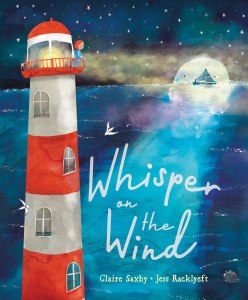
Whisper on the Wind by Claire Saxby & Jess Racklyeft (Allen & Unwin)
Whisper on the Wind is a gorgeous book, perfect for themes of the sea, lighthouses and family in Key Stage One.
Late one night, the whisper of Ren’s dream makes its way from the lighthouse out across the sea. As the text builds page after page, beautiful imagery and incredible illustrations carry the dream to where it belongs. A sailor (Ren’s mother) captures the dream and makes her way back home to her family.
This is a story my own children would have asked for again and again when they were small. The messages of love and family are heartwarming while the sea and all the creatures within it bring life and movement to each page. The poetic text will be a fantastic model for writing, allowing children to create an adventure for their own dreams. I wonder who will find them.

The Lighthouse Keeper’s Lunch – 45th anniversary edition by Ronda and David Armitage (Scholastic)
When it comes to Key Stage One, it doesn’t get much more classic than The Lighthouse Keeper’s Lunch! A fun story of life near the sea, it gives children a chance to talk about the importance of lighthouses, the people who work there and all the challenges that come with maritime life – including very naughty seagulls.
Every day, Mrs Grinling makes a delicious lunch for her husband who is working hard at the lighthouse. One day, it is intercepted by a group of greedy seagulls and Mr Grinling ends up with no lunch! They come up with all sorts of plans to stop the seagulls – even sending their cat, Hamish, to guard the meal – but nothing seems to work. Finally, the they come up with the perfect solution.
This glossy new edition is sure to entertain a whole new generation of readers and keep the Lighthouse Keepers tradition going strong!
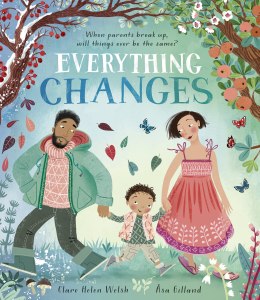
Everything Changes by Clare Helen Welsh & Asa Gilland (Little Tiger)
Life is always changing but what happens when there’s a really big change? Everything Changes explores what happens when parents break up. Told from the point of view of a child whose parents have decided to separate, it explores all the emotions that come with dealing with this storm – it’s not fair, was it my fault, can I fix it? Eventually, the child sees that there will always be changes and challenges to face but if they learn to dance in the raindrops, everything will be alright.
This is an important book for children who are going through a family break up and those who are not. It will build empathy and promote discussion about this emotional topic. Most importantly, it allows children to be heard and know that their feelings are valid.

When You Joined Our Family by Harriet Evans & Nia Tudor (Little Tiger)
Families come in all sorts of shapes and sizes. Adoption is one of those shapes. When You Joined Our Family explores the love, promises and trust that come with this very special relationship. It is a message from a parent to a child highlighting everything that is important in a family. There is a focus on the love that binds them together no matter what and the joy in their similarities and differences.
This is a lovely book to share with children who are adopted but also in the classroom as a part of a discussion about different types of families. Children will be able to identify everything that is unique and special about adoptive families and see how much there is to celebrate.

Kitsy Bitsy’s Noisy Neighbours by Polly Faber and Melissa Crowton (Nosy Crow)
Kitsy Bitsy’s Noisy Neighbours is a charming book about what it means to be a good neighbour and respect those around you. It all starts on the top floor of a high rise apartment building. Honky Tonk and Hunky Dory make too much noise which wakes the baby in the flat below. The crying baby disturbs the neighbour below them and so on until everyone is upset. Eventually, Kisty Bitsy has enough of the fighting and shows everyone how to get along.
Children will love the detail of the illustrations, spending ages exploring each apartment (and, if they’re anything like my own children, choosing which one they would like to live in). The message of the story will encourage children to talk about how they can respect their own “neighbours” whether that’s at home, school or out in the community.
As an added bonus, there is also a QR code inside the front cover that takes readers to a free Stories Aloud audio book.

What Feelings Do When No One’s Looking by Tina Oziewicz & Aleksandra Zajac (Pushkin Children’s)
This story reminds me of the little pompoms my mum used to give me when I was small. She called them “warm fuzzies” and I could keep them in my pocket to make me feel better when I was sad. But what would happen if they jumped out of my pocket – what would emotions do when I wasn’t looking?
The images created through illustrations and words are thought-provoking and beautiful. Simple in their muted colour scheme, they will help children to understand the meaning of different feeling words and perhaps recognise some of the actions in their own life. Anxiety hiding under the wardrobe, freedom sailing in the wind and hospitality baking cake show clearly what we might do when we feel that way. This book will be invaluable in classrooms, at home and for learning mentors or counsellors who help children to recognise and cope with their feelings. I can’t wait to share it with colleagues.
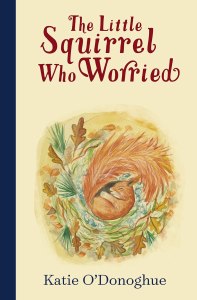
The Little Squirrel Who Worried by Katie O’Donoghue (Gill Books)
With beautiful Beatrix Potter style illustrations, The Little Squirrel Who Worried is just right for readers who are ready to make the transition from picture books to slightly longer texts, Large print and a charming story will keep them moving through the pages as they get to know Little Squirrel and his caring forest friends.
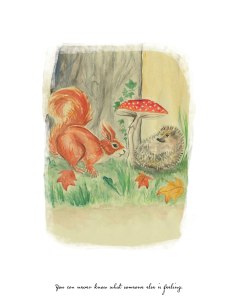
Little Squirrel is worried about leaving his cosy, safe nest to search for food to get him through the long winter. He knows he has to but he’s afraid. Bit by bit, he realises that he’s not the only one who feels this way and he has a wonderful group of friends who will support him every step of the way.
This is a lovely book to help children explore their feelings and discuss how to cope when they feel anxious or the world just seems too big. It would be good to use in small groups discussions to help children chat about times when they feel worried and how they got through it – a great resource for Key Stage One teachers, primary learning mentors and parents.
Click on the covers below to find out more or purchase online:


Books by Kate Heap:


 Scope for Imagination